
 Having asymmetric feet, where one foot is larger or a leg is slightly longer than the other, can raise concerns about its potential impact on posture.
Many people believe that asymmetric feet are a root cause of postural imbalances, leading to issues such as back pain, shoulder misalignment, or even scoliosis. But is this belief accurate?
In this article, we will explore whether asymmetric feet truly have a direct effect on posture, and discuss why the real causes of postural problems are often rooted in descending factors rather than originating in the feet.
Understanding Asymmetric Feet
Asymmetric feet are a common physical trait that can be caused by a variety of factors. This asymmetry might stem from natural differences in bone structure, injuries that have caused uneven growth, or even lifestyle habits such as favoring one leg over the other when standing or walking.
One of the more frequent concerns is that asymmetric feet may lead to a leg length discrepancy, which could theoretically cause one side of the body to work harder than the other, leading to postural imbalances.
Many people with asymmetric feet worry that the unevenness might create a chain reaction in the body, affecting the spine, shoulders, and hips. It’s common to believe that this would cause postural issues and discomfort.
However, recent studies and approaches, like the Starecta Method, indicate that postural issues are not primarily driven by what happens in the feet or lower body but are instead influenced by descending causes.
The Myth of Foot-to-Posture Connection
A widespread theory in the field of posture correction is the idea that asymmetric feet can lead to postural misalignment, starting from the lower body and working its way up.
According to this theory, foot imbalances like overpronation or leg length discrepancies would force the body to compensate by shifting the spine, hips, and shoulders, eventually leading to more serious posture-related problems. However, this view is based on an incomplete understanding of how the body works as an interconnected system.
The truth is that asymmetric feet do not have the kind of direct impact on posture that many believe. While foot differences might contribute to discomfort or mild adjustments in gait, the most significant contributors to postural issues come from the upper body, particularly the alignment of the skull, jaw, and spine.
When the body compensates for problems originating from the top, such as a misaligned skull or jaw, the lower body, including the feet, may react by adapting to maintain balance, but this is a secondary effect rather than a root cause.
In this picture, these 2 guys lack a leg. They don’t look very asymmetric, do they? This is the evidence that feet have NO influence on posture.

Posture and the Descending Cause Model
The descending cause model of posture correction suggests that postural issues stem primarily from the top of the body and work their way downward. The position and alignment of the skull and jaw, and how they interact with the cervical spine, are the most critical factors in determining overall posture.
When there is an imbalance at the top, the body compensates by adjusting below, which might cause the appearance of issues in the lower body, including the feet. However, these are simply adaptations to maintain balance rather than the cause of the problem.
For example, when the skull is not properly supported by the jaw or teeth, it may tilt or sink slightly. This small movement at the top forces the entire body to compensate. The spine may curve unnaturally, the shoulders may become uneven, and the hips may rotate. These adjustments affect how the body weight is distributed, which could lead to a change in gait or slight asymmetric feet adaptation.
However, the feet are reacting to the imbalance in the skull and jaw, not the other way around.
Why Foot Asymmetry Is Not the Root Cause
Many traditional approaches to posture correction focus on the feet, prescribing orthotics, heel lifts, or other devices to try to correct leg length discrepancies or asymmetric feet. While these may provide temporary relief, they do not address the actual cause of the imbalance. These methods treat the symptom but not the root problem.
The true source of postural imbalances lies in the upper body, particularly the alignment of the skull, jaw, and spine. Even if you have asymmetric feet, the postural issues you experience are more likely due to the body’s response to a misalignment in the upper body. For example, if your jaw is not properly aligned or if your skull tilts slightly, the body will adapt below to maintain balance.
This adaptation might include a slight adjustment in your gait, which could make your asymmetric feet more noticeable. But correcting the upper body alignment will help resolve the posture issue without needing to address the feet directly.
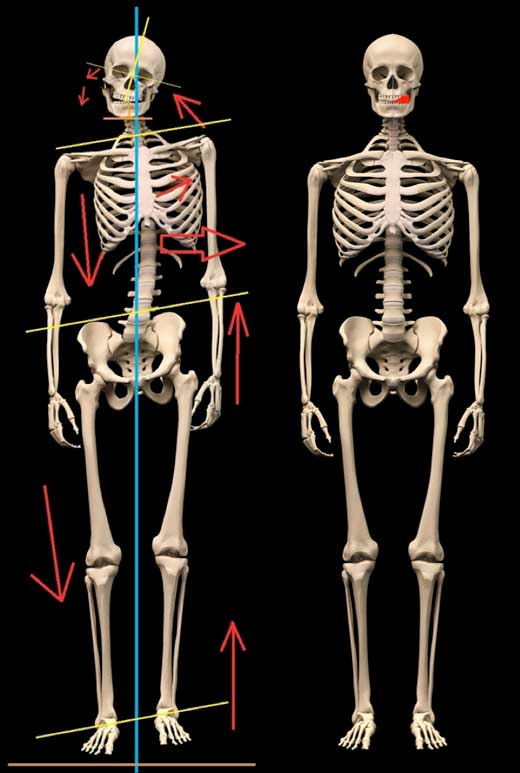 postural alignment vs feet asymmetry
The Role of the Skull and Jaw in Posture
At the heart of the descending cause model is the idea that the alignment of the skull and jaw plays a crucial role in maintaining overall body posture. When the skull is not properly supported, the body must compensate by adjusting the position of the spine, hips, and even feet. This means that even if you have asymmetric feet, the key to correcting your posture lies in aligning the skull and jaw, not the feet.
The Starecta Method is an innovative approach that recognizes the importance of this descending cause model. By using a custom dental device to align the skull and jaw, the body can naturally restore balance and correct postural imbalances.
This approach directly addresses the root cause of postural issues, allowing the body to realign itself from the top down.

Final Thoughts on Asymmetric Feet and Posture
In conclusion, while asymmetric feet may cause some concern, they are not the primary cause of postural issues. Posture is determined by descending causes that begin in the upper body, particularly in the alignment of the skull and jaw. The feet, along with the legs and hips, simply adapt to these upper body imbalances in an attempt to maintain balance.
Correcting postural issues by focusing on the feet alone will not provide long-term relief or alignment.
Instead, addressing the alignment of the skull and jaw is the most effective way to restore overall postural health. Approaches like the Starecta Method offer a solution by correcting the upper body alignment, allowing the body to naturally resolve postural imbalances without relying on foot-focused treatments.
