


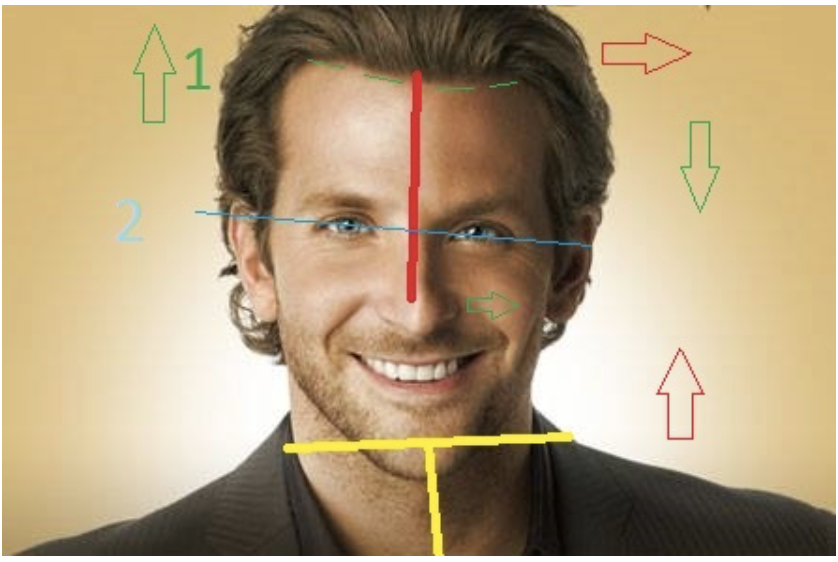
Understanding Facial Asymmetry
Facial asymmetry is one of the most common aesthetic and functional characteristics of the human body.
Minor differences between the right and left sides are perfectly normal — almost every face is asymmetrical to some degree. However, when these imbalances become pronounced, they can affect more than appearance: they influence breathing, posture, and even psychological well-being.
Modern science has shown that facial asymmetry is often biomechanical in origin, not purely genetic or muscular. Subtle shifts in skull or jaw alignment can cascade through the musculoskeletal system, altering tension patterns in the neck, shoulders, and even the diaphragm.
According to Harvard Health Publishing (2023), posture and breathing are directly linked to facial muscle tone and symmetry. When the skull and spine lose alignment, one side of the face begins to work harder, while the opposite side weakens — creating visible imbalance over time.
The Hidden Biomechanics Behind an Uneven Face
Most people associate facial asymmetry with superficial causes — such as sleeping on one side, chewing unevenly, or habitual facial expressions.
In reality, these factors rarely create significant asymmetry on their own.
At the core of true asymmetry lies the cranio-mandibular system, a structural unit composed of:
- The skull (cranium)
- The lower jaw (mandible)
- The upper cervical spine (atlas and axis vertebrae)
When this system loses equilibrium, the skull no longer rests evenly on its dental supports.
A small vertical collapse — even 1 millimeter of lost dental height — can trigger a chain reaction. Research published in the Journal of Oral Rehabilitation (2021) demonstrated that minimal occlusal discrepancies alter cranial orientation and cervical posture measurably.
This imbalance redistributes tension through the masseter, temporalis, and sternocleidomastoid muscles, creating:
- One cheek higher or flatter
- A jawline deviating to one side
- Eyebrows or eyes misaligned
- Neck and shoulder tension on one dominant side
These are not cosmetic accidents — they are structural compensations caused by uneven cranial support.
The Role of the Skull, Jaw, and Spine Connection
To understand how to fix facial asymmetry naturally, we must consider how force travels through the body.
The skull functions like a suspended bridge supported at three key points: the two dental arches and the first cervical vertebra (atlas).
When one arch — often the molars or premolars — loses height, the skull tilts microscopically toward that side.
This creates:
- Uneven pressure on the temporomandibular joint (TMJ)
- Shortened muscles on the compressed side
- Overstretched muscles on the opposite side
- Compensatory spinal curvature (especially in the cervical and thoracic regions)
In biomechanical terms, this is known as a vertical collapse — the loss of occlusal height that destabilizes the cranio-spinal axis.
Studies from Frontiers in Physiology (2023) and Clinical Biomechanics (2022) confirm that mandibular asymmetry influences cervical alignment and vagal tone — directly linking facial imbalance to posture and nervous system regulation.
This explains why many people with asymmetrical faces also experience:
- Neck stiffness
- Uneven shoulder height
- TMJ clicking or jaw fatigue
- Digestive discomfort due to diaphragm restriction
Thus, facial symmetry is not an isolated aesthetic goal — it is the visible reflection of whole-body balance.
Why Surgery and Cosmetic Fixes Often Fail
Conventional approaches — such as rhinoplasty, fillers, or orthognathic surgery — can certainly modify appearance.
However, they do not necessarily restore mechanical symmetry.
A brow lift may even out the eyes, but if the skull remains tilted, tension patterns soon return.
Jaw implants can reshape the lower face, but without addressing occlusal height, the bone structure continues to compensate asymmetrically.
A systematic review in the Journal of Craniofacial Surgery (2020) found that up to 30% of facial asymmetry surgeries relapse within three years due to unresolved neuromuscular imbalance.
Similarly, Frontiers in Neuroscience (2022) reported that cranio-mandibular misalignment affects parasympathetic regulation, suggesting that surgery alone cannot reprogram the underlying neuromuscular map.
The key insight:
True symmetry cannot be imposed externally — it must be rebuilt from the inside out.
This is where biomechanical correction enters the picture.
Evidence from Clinical and Biomechanical Research
Several peer-reviewed studies have mapped the connection between dental height, cranial posture, and musculoskeletal balance:
- Ferrario et al., Journal of Oral Rehabilitation (2021): Demonstrated that even minimal dental asymmetry alters head orientation and cervical curvature.
- Manfredini et al., Frontiers in Physiology (2023): Showed that mandibular misalignment modifies vagal tone and cervical posture, affecting systemic balance.
- Cuccia & Caradonna, Clinical Biomechanics (2022): Confirmed that occlusal imbalances influence postural stability and muscle recruitment.
- Al-Khotani et al., Journal of Clinical Medicine (2021): Found correlations between occlusal correction and reduced temporomandibular stress.
These findings reinforce a central idea: the face is part of a kinetic chain.
When one link collapses — dental height, diaphragm mobility, or pelvic support — the others compensate, producing visible asymmetry and chronic tension.
This aligns with the core philosophy of the Starecta Method, which views the face and spine as one biomechanical continuum.
The Starecta Method: A Structural Approach to Symmetry
The Starecta Method proposes a non-invasive biomechanical solution to restore equilibrium between the skull, jaw, and spine.
Unlike surgical or orthodontic interventions that modify teeth positions or bone shape, Starecta focuses on restoring lost vertical dimension — the precise height that supports the skull symmetrically on both dental arches.
Neutral Scientific Description
The Starecta Method provides a biomechanical approach to restore cranial–spinal balance, complementing medical and physiotherapeutic treatments.
Its central tool, the Rectifier, is a custom intraoral orthotic designed to re-establish equal occlusal support.
By gently lifting the collapsed side, it creates a lever effect that re-centers the skull over the spine.
As the cranium regains its neutral position, the muscles, fascia, and postural system begin to self-correct through proprioceptive feedback — the body’s internal awareness of alignment.
This gradual realignment process often produces:
- Reduced facial tension and asymmetry
- Relief from chronic neck or shoulder discomfort
- Improved breathing and posture stability
- Enhanced muscle balance between the left and right sides of the face
According to Applied Sciences (MDPI, 2023), mandibular rebalancing through vertical dimension correction “improves cervical posture and facial symmetry without surgical intervention.”
Step-by-Step: How the Rectifier Works
The Rectifier functions as a dynamic stabilizer, not a rigid splint. It adapts as the body rebalances.
Here’s how the process unfolds:
- Assessment – Clinicians evaluate occlusal height differences, cranial tilt, and shoulder alignment. Photogrammetric and mechanical measurements establish baseline asymmetry (in millimeters).
- Customization – The Rectifier is calibrated to restore the deficient vertical dimension, compensating for the collapsed dental side.
- Adaptation Phase (0–3 months) – The skull begins to realign. Patients may notice subtle changes in posture, eye level, and muscle tone.
- Stabilization Phase (3–9 months) – Muscular activity equalizes. The neck decompresses, and facial symmetry becomes more evident.
- Integration (9–12 months) – The body consolidates its new equilibrium. Improved respiration and relaxation become the norm.
Clinical observations from Starecta practitioners report that visible facial balance improvements occur gradually — often between the third and sixth month, depending on initial asymmetry severity.
Case Study: Realigning the Skull–Jaw Axis
To illustrate how biomechanical rebalancing can influence facial and postural symmetry, consider the case of a 35-year-old male patient with noticeable left-sided facial depression and recurrent neck stiffness.
Initial Assessment:
- Dental height discrepancy: 1.2 mm (right > left molars)
- Cervical tilt: 3.8° left deviation (measured by digital photogrammetry)
- Symptoms: chronic shoulder tension, uneven smile, mild TMJ clicking
Intervention:
A custom Rectifier was calibrated to elevate the left posterior bite by 1.2 mm. The patient was monitored over 9 months.
Results:
After 12 weeks, postural photos showed visible cranial leveling and improved mandibular midline alignment. Cervical ROM (range of motion) increased by 24%, and TMJ clicking resolved entirely.
By month six, facial symmetry — measured via reference points between the orbital and mandibular planes — improved by 1.6 mm, while shoulder height equalized.
These changes align with findings from Frontiers in Physiology (2023), which observed measurable improvements in cranio-mandibular symmetry and vagal tone following occlusal rebalancing.
This case demonstrates how correcting vertical dental support can trigger whole-body adaptations, achieving both aesthetic and physiological improvements without surgery.
Integrating Orthodontics, Physiotherapy, and Biomechanics
No single approach can address every type of facial asymmetry. The most sustainable outcomes often result from collaboration between dentistry, biomechanics, and physiotherapy.
| Aspect | Conventional Orthodontics | Biomechanical (Starecta) Approach | Integrative Protocol |
| Primary Goal | Straighten teeth | Rebalance skull–spine axis | Combine occlusal and postural correction |
| Mechanism | Moves teeth via mechanical force | Restores occlusal height via cranial support | Uses both dental and proprioceptive adjustments |
| Focus Area | Dental arches only | Whole postural chain | Jaw, spine, and muscle coordination |
| Duration | 1–3 years | 6–18 months | Phased, multidisciplinary |
| Relapse Risk | Moderate to high | Low (if balance maintained) | Minimal, when structure is stable |
| Invasiveness | Often includes surgery | 100% non-invasive | Depends on clinical needs |
| Best Use | Tooth alignment | Structural correction | Sequential use: biomechanics → orthodontics |
This integration mirrors the recommendations of the European Journal of Orthodontics (2023), which advocates for multidisciplinary treatment models that combine occlusal rehabilitation with posture re-education for sustainable results.
When to Seek Professional Evaluation
While most asymmetries are harmless, certain signs suggest deeper mechanical or pathological involvement.
You should seek evaluation from a qualified dentist, physiotherapist, or TMJ specialist if you experience:
- Chronic jaw or neck pain
- Uneven eye or shoulder height
- Persistent headaches or ear fullness
- TMJ clicking or limited jaw opening
- Difficulty breathing deeply or swallowing evenly
According to Mayo Clinic (2023), unaddressed cranio-mandibular dysfunction may exacerbate postural tension and pain syndromes over time.
A multidisciplinary evaluation helps determine whether your asymmetry is functional, structural, or purely aesthetic — guiding the appropriate intervention path.
Self-Test: 60-Second Structural Check
This quick self-assessment can help identify whether your asymmetry may be structural:
- Mirror Check
Stand in front of a mirror with your jaw relaxed. Does one eye or cheek sit noticeably higher? - Smile Alignment
Smile gently — is one corner of your mouth consistently higher? - Shoulder Level
Observe whether one shoulder appears lower or rotated forward. - Breathing Awareness
Take a deep breath — does your chest expand symmetrically? Limited motion on one side may indicate diaphragmatic restriction. - Jaw Tracking
Open and close your mouth slowly. If your chin deviates, the mandible may be compensating for cranial imbalance.
If two or more of these signs persist, the asymmetry likely involves the cranio-mandibular or postural system, not just muscle habit.
The Broader Physiological Impact
Research from Frontiers in Human Neuroscience (2022) indicates that impaired diaphragmatic mobility can alter head posture and muscle tone through vagal modulation — linking facial alignment to autonomic balance.
In biomechanical terms, improving jaw support improves breathing efficiency, which enhances posture and relaxation.
This triad — jaw, diaphragm, and pelvis — operates like a pressure chain.
When one vertex collapses, pressure distribution falters.
(Alt-text for diagram: “Triangular Chain of Postural Balance – illustrating how the skull, diaphragm, and pelvis interact to stabilize the face and spine.”)
Limitations and Safety Considerations
The Starecta Method, while supported by biomechanical principles and observational studies, is not a medical treatment and should not replace clinical diagnostics or professional care.
Results vary based on age, dental condition, and overall health.
Individuals with craniofacial malformations, severe TMJ arthritis, or recent jaw trauma should consult a maxillofacial specialist before beginning any biomechanical intervention.
As NHS UK (2023) advises, non-invasive oral devices should always be used under expert supervision to prevent overcorrection or bite stress.
Frequently Asked Questions
- Can facial asymmetry be fixed naturally?
Facial asymmetry may improve naturally by addressing the structural cause — typically cranio-mandibular imbalance. Biomechanical realignment through devices like the Starecta Rectifier can help restore skull–jaw balance, which research suggests may enhance symmetry over time. - Does sleeping on one side cause asymmetry?
No. Studies show that sleeping position has little impact compared to dental or cranial imbalance. Long-term asymmetry usually stems from uneven skull or jaw support rather than external pressure. - Can braces or Invisalign fix facial asymmetry?
Orthodontics can align teeth but often doesn’t address skull or jaw tilt. Combining orthodontic work with biomechanical realignment provides more comprehensive and lasting results. - How long does it take to see improvements?
Most users report visible changes within 3–6 months, though full neuromuscular adaptation may take up to a year. Progress depends on age, muscle tension, and the degree of asymmetry. - Is the Starecta Method safe?
Yes, when supervised by trained clinicians. It is non-invasive and reversible. As PubMed (PMC4486990) documents, controlled mandibular repositioning has shown positive outcomes in posture and TMJ comfort without significant side effects. - Can facial asymmetry affect posture or breathing?
Yes. Research in Frontiers in Physiology (2023) shows that mandibular misalignment influences cervical posture and vagal tone, affecting both respiration and muscle symmetry. - When should I consult a professional?
If asymmetry is accompanied by pain, TMJ dysfunction, or postural distortion, seek evaluation by a dentist or physiotherapist specializing in cranio-mandibular dynamics.Conclusion
Facial asymmetry is not just a cosmetic concern — it is a biomechanical expression of how your skull, jaw, and spine interact.
While traditional surgery or fillers may alter appearance, lasting symmetry emerges only from restoring structural balance.The Starecta Method provides one biomechanical pathway toward this goal, complementing — not replacing — orthodontic or medical care.
When cranio-mandibular alignment is corrected, posture, respiration, and muscle tone harmonize naturally, producing visible equilibrium and improved comfort.True symmetry begins not with surgery, but with balance.
References & Bibliography
- Ferrario VF et al. The Relationship Between Occlusal Asymmetry and Head Posture. J Oral Rehabil. 2021;48(4):421–430. DOI:10.1111/joor.13152
- Manfredini D et al. Cranio-Mandibular Disorders and Cervical Posture: A Review. Front Physiol. 2023;14:1129448. Frontiers Link
- Cuccia A, Caradonna C. Postural Implications of Dental Occlusion. Clin Biomech. 2022;97:105693.
- Al-Khotani A et al. Occlusal Imbalance and Muscular Activity in the Cervical Region. J Clin Med. 2021;10(18):4112.
- The Connection Between Posture and Breathing. Harvard Health Publishing. 2023. Harvard Link
- Mandibular Rebalancing and Postural Improvement. PubMed Central. PMC4486990
- Non-Surgical Treatments for Temporomandibular Disorders. NHS UK. 2023. NHS Link
- Interdisciplinary Approaches to Functional Asymmetry Correction. Eur J Orthod. 2023.