

This report focuses on asymmetrical face. Symmetry has always been an ideal in aesthetics and health, with many individuals resorting to methods such as Botox, fillers, surgery, or even facial exercises to achieve it. However, these common practices only offer superficial or temporary solutions, failing to address the deeper biomechanical roots of asymmetry. The solution lies in understanding how the body functions as a biomechanical system and working with methods like the Starecta Rectifier, which targets these foundational issues.
The Failure of Common Practices
1. Botox and Fillers
Botox and fillers are perhaps the most popular quick-fix solutions for those looking to fix asymmetry. However, they are purely cosmetic and do not address the underlying causes of asymmetry. These procedures only mask the symptoms for a short time—paralyzing muscles or filling out areas—but do not offer lasting effects. The body continues to follow its natural progression toward asymmetry, rendering these methods ineffective in the long term. With continuous use, the results become less effective, and the cost—both financial and biological—skyrockets.
2. Surgery
While surgery can offer more durable results than injectables, it still only provides an external fix. Surgical procedures might last for several years, but they don’t resolve the root cause of asymmetry. Eventually, the body’s asymmetrical tendencies reappear, requiring further operations. Surgery also carries higher risks, significant costs, and long recovery times, making it a less-than-ideal solution for something as intrinsic as body symmetry.
3. Myo-facial Exercises
On the surface, myo-facial exercises seem to offer a more holistic approach, as they work with the muscles themselves. These exercises may improve muscle tone and strength, but they too fail to address the root cause of asymmetry. While they may be effective in improving facial aesthetics temporarily, they don’t fix the biomechanical misalignment that causes asymmetry to form in the first place.
Why These Methods Fail
All these methods, whether they involve muscle manipulation, skin treatment, or surgical alteration, overlook the core issue: asymmetry in the body originates from deeper biomechanical imbalances. Without addressing these fundamental imbalances, any superficial treatment is only temporary and requires constant maintenance.
The key to lasting symmetry lies in fixing the body’s biomechanical structure, which brings us to the Starecta Method.
Asymmetry relies on Biomechanics
Facial asymmetry originates from the intricate relationship between the skull and the mandible. This connection plays a critical role in maintaining the overall facial balance and posture of the body. When there is an imbalance in this craniomandibular system, it leads to facial asymmetry and postural distortions that affect not only your face but also your entire musculoskeletal system. Addressing this imbalance is key to achieving a more symmetrical face.
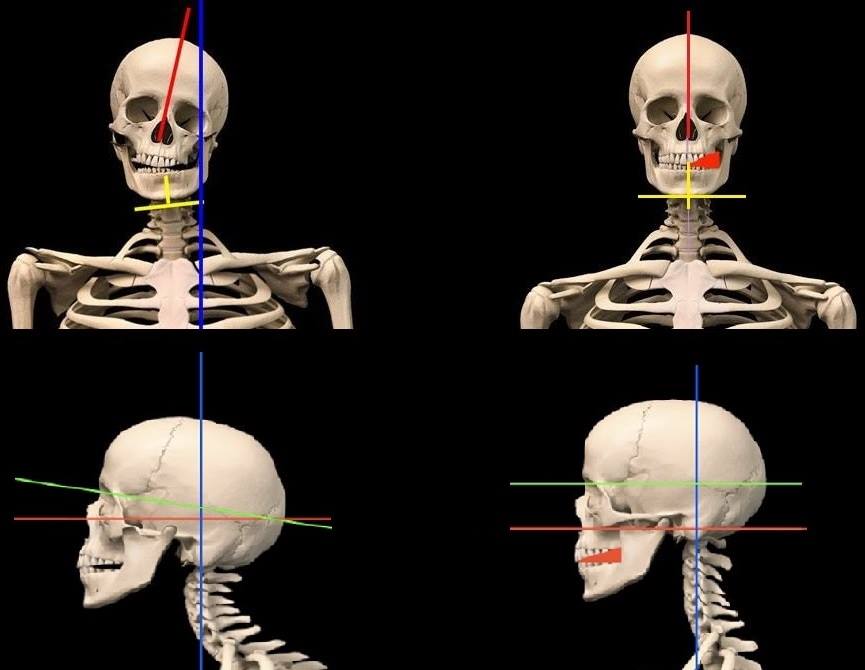
How Craniomandibular Imbalance Affects Your Face
The skull relies on the mandible and dental arches for proper support. When this balance is disrupted—due to misalignment in the jaw or a change in dental height—the skull can tilt or rotate. This creates compensatory shifts in your posture, which then cause one side of your face to appear more prominent or misaligned. Over time, this can lead to uneven cheekbones, jawlines, or even an imbalanced eye line, all contributing to facial asymmetry.
The Impact on Your Overall Facial Structure
A symmetrical face requires a harmonious craniomandibular system. When the mandible doesn’t support the skull, it lets it fall, causing tension and imbalance. This not only affects facial balance but also alters your posture, creating strain throughout the body. As the facial musculature work to support the skull in this misaligned state, the imbalance manifests visibly—making your face look uneven and contributing to wrinkles, slanted smiles, and an unbalanced jawline.
Why Cosmetic Surgery Fails to Address Facial Asymmetry
Cosmetic surgery, fillers, and Botox are popular solutions to fix facial asymmetry. However, these methods are only surface-level fixes. While they may enhance facial aesthetics temporarily, they do not address the underlying issue of craniomandibular imbalance. Without surgery, a long-term solution to make your face more symmetrical involves adjusting the structural misalignment. Facial plastic surgery might adjust the appearance, but it doesn’t prevent the underlying problem from worsening over time.
Restoring Facial Balance Without Surgery
To restore facial symmetry and achieve a balanced, symmetrical look, the craniomandibular system must be corrected at its root. Non-invasive methods that work on realigning the mandible and skull are far more effective than cosmetic surgery. When the mandible is correctly aligned, the surrounding muscles relax, allowing the face to regain its natural symmetry. This makes your face appear more balanced and eliminates the need for repetitive procedures like Botox or fillers.
The Role of Facial Muscles in Symmetry
Facial musculature are directly affected by any imbalance in the skull and mandible. As the jaw doesn’t support the skull, one side of your face becomes overworked, causing asymmetry in facial expressions and muscle tension. By addressing the craniomandibular imbalance, the tension in these muscles is reduced, enhancing facial harmony and allowing the facial structure to naturally realign. This process makes your face more symmetrical without the need for invasive procedures.

Enhancing Overall Facial Symmetry
Holding the skull from sinking improves facial aesthetics and enhances overall facial harmony. By correcting the structural imbalance, the face regains symmetry, and the body’s posture improves as well. This holistic approach ensures long-lasting results and prevents the need for continuous cosmetic treatments. Without surgery, you can achieve a more symmetrical face by focusing on the root cause of the imbalance, ultimately enhancing both facial appearance and health.
Achieving Facial Balance the Right Way
Facial asymmetry is often a sign of deeper biomechanical imbalances within the craniomandibular system. Temporary fixes like Botox or cosmetic surgery may offer short-term solutions, but they fail to address the root cause. By working on the structural relationship between the skull and mandible, you can restore facial balance, enhance facial harmony, and make your face more symmetrical—without the need for surgery.
How the Rectifier Restores Symmetry
The Rectifier Starecta works by supporting the skull and applying 3 fundamental laws. This support is key because when the skull is properly supported, the entire musculoskeletal system, including the face, can return to a balanced state.
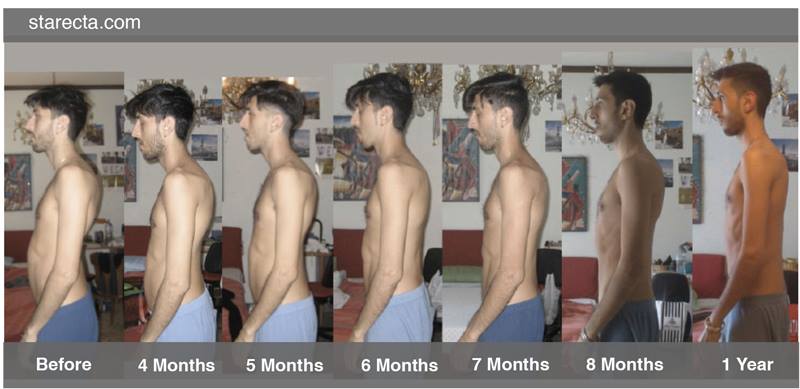
The Lever Mechanism of the Rectifier
The Rectifier operates by acting as a biomechanical lever. It is placed in the mouth between the teeth, creating the necessary occlusion to lift and support the skull. This relieves pressure on muscles on one side of the face, which are often overcompensating for the misalignment. As the skull regains its fix position, the body naturally starts to straighten, which helps to fix an asymmetrical face and balance the muscles involved.
Fixing Facial Asymmetry
As the Rectifier restores proper support, it also impacts the facial muscles. When the skull is not supported, facial features become uneven, with one side of the face often appearing more prominent. The Rectifier corrects this by supporting the skull, which balances the tension in the facial musculature and helps reduce noticeable asymmetry. Over time, the facial features become more symmetrical, which is often visible in a photo of your face taken before and after using the device.
Long-Term Effects on the Body and Face
By restoring the skull to its natural position, the Rectifier not only addresses facial asymmetry but also improves overall posture. This biomechanical correction alleviates strain on the body, allowing for better energy conservation and enhanced physical performance. The alignment of the mandible with the skull ensures that the face looks more balanced, fixing issues like an asymmetrical jawline or uneven cheekbones without the need for surgery.

Scientific Studies Explaining Facial Asymmetry
There is growing scientific support for the relationship between dental occlusion and body posture. Studies such as the one by Matteo Saccucci et al. (2011) have reviewed the potential link between scoliosis and dental malocclusion. Moreover, research from Alberto Baldini et al. (2012) on athletes demonstrates how occlusal treatments can improve performance by addressing postural imbalances.
These findings suggest that biomechanical misalignments originating from dental issues can indeed cause far-reaching postural and health problems, confirming the Starecta theory that correcting occlusion can have profound effects on the body’s overall alignment and health.

The Scientific Foundation of Starecta’s Theory
The Starecta method, developed by Moreno Conte, revolves around the principle that the alignment of the skull and mandible plays a crucial role in both facial and body symmetry. While the scientific community is gradually recognizing the connection between dental occlusion and body posture, research is still catching up to Conte’s groundbreaking insights.
Correlation Between Dental Occlusion and Body Posture
Several studies support the idea that occlusion, or how the teeth meet, affects body posture. One study showed that dental malocclusion could impact the cervical spine, shoulders, and even the lower back, suggesting that the body operates as a single biomechanical unit. These findings align with the Starecta theory, which posits that proper dental alignment helps fix asymmetrical features, enhances facial balance, and restores the body’s posture
How Occlusion Affects Facial Symmetry
Research has also demonstrated that misalignment in the jaw can lead to asymmetrical facial features, such as uneven eyes or cheekbones. When the skull is improperly supported, muscles on facial profile overcompensate, causing an asymmetrical face. The Starecta Rectifier addresses this by realigning the skull and mandible, enhancing facial symmetry and making your face look more balanced without surgery.
The Scientific Community’s Progress
While the evidence supporting the connection between occlusion and posture is growing, some researchers still debate the exact relationship between cranio-mandibular alignment and body posture. Studies have shown mixed results, often due to the complexity of measuring these factors consistently. However, as more advanced imaging technologies and methodologies are applied, the scientific world is gradually moving towards validating Conte’s early hypotheses.
In conclusion, the Starecta method is ahead of its time in addressing facial proportions and body alignment through dental occlusion. As scientific research advances, we are likely to see more validation for this innovative approach to fixing asymmetrical faces and enhancing overall symmetry.

Restoring facial symmetry
In conclusion, while many traditional methods such as Botox, fillers, and surgery offer temporary or surface-level fixes for facial asymmetry, they fail to address the deeper biomechanical imbalances that cause asymmetry in the first place. These common practices may temporarily enhance facial symmetry, but they do not tackle the underlying issue that stems from the misalignment between the skull and mandible. The Starecta method offers a revolutionary approach, focusing on the realignment of the craniomandibular system to restore the natural balance of the body and facial bones.
By acting as a biomechanical lever, the Starecta Rectifier helps improve facial symmetry and enhances overall facial harmony by fixing the root cause of the problem. This method not only fixes facial asymmetry but also addresses the body’s postural issues, making the face look more balanced and symmetrical without surgery. Scientific research is increasingly supporting the link between dental occlusion and body posture, showing how misalignments in these areas can lead to asymmetrical features, particularly in the face.
As the scientific community continues to investigate and validate the relationship between occlusion and posture, we can expect more recognition of the Starecta method’s potential to improve facial symmetry and body alignment. With its focus on correcting the biomechanical foundations of the body, Starecta presents a long-term solution for individuals looking to enhance facial balance and aesthetics, making it a superior alternative to temporary cosmetic treatments.